Showing posts with label education. Show all posts

Bridging the quality gap: Becoming a peer-reviewed blog

We are now a peer-reviewed blog.
Starts today.

I have been frustrated (in a good way) by the recent social media discussions (see BoringEM.com) about how social media content is viewed with a skeptical eye by medical educators, academicians, and professionals because of the lack of formal quality-control mechanisms.

Common questions from skeptics:
  • "Is it peer-reviewed?"
  • "How can I tell that it is a quality blog post?"
These are reasonable questions to ask. These questions, however, can not be answered with traditional answers.
  • Blogs with greater web traffic most likely have higher-quality content by word of mouth and external linking from other websites. 
  • The power of the crowd "course-corrects" for errors, such as Wikipedia. 
Still these are not very satisfying answers. Can we do better?


Social media-based medical education (FOAMed = Free Open Access Meducation) has gained much popularity through a grass-roots approach, but now faces a glass-ceiling effect. Learners gravitate towards it, but traditional educators still shy away from it. Blogs often fall short when compared to the gold standard of print journals, which have a formal peer-review editorial system for quality control. This remains the gold standard despite known faults and biases in the system.

So this past weekend, I was frustrated into action!

I experimented with several blog models (example) to create a more formal peer-review process. The basic premise is that the power of the crowd should not be undervalued, as demonstrated by the star ranking system on commercial sites such as Amazon, Yelp, and Netflix. Think about the last time you revised your purchases based on reviews. Similarly, our star-rating system, which will be seen at the top of our blog posts, can now help readers assess the quality of each blog post, to assist less discriminating readers regarding content quality.

To make this work, I hope that our readers will help the FOAMed community by rating each blog topic that they read using the following criteria, which mirrors similar metrics for journal manuscripts:


At the bottom of each blog post, raters will be asked to give optional, anonymous demographic information about themselves to help demonstrate external validity.


Under this form will be a public link to the Demographics results (sample Google Docs sheet), in case people are interested.

In this past weekend's experiment, I received 6 peer reviews in the first 4 hours, which included 1 medical student, 1 resident, 3 practicing physicians, and 1 paramedic from 2 countries. (Thanks to those who responded!) How amazing is that? Contrast that to print journals who typically have 2-3 peer reviewers read your manuscript.

Now the question is: How many crowd-sourced reviewers will be needed to demonstrate an adequate quality-control process? I don't know. The more the better, I assume.  

Comments?

Patwari Academy videos: Presenting patients in the ED


Doing well on your Emergency Medicine rotation, whether you are a medical student or resident, will depend in large part on your ability to deliver a coherently concise presentation to the senior resident or attending physician. It's about telling a story that fits into the construct of how the expert physician thinks.

If you ask 20 attendings physicians what the perfect presentation is like, you'll get 40 different answers. I know, frustrating. Rahul's video describes a reasonable approach and thought process.


We've also covered this hot topic on this blog:

Related links:
1. Teaching Residents from Other Services: EM-RAP Educators Edition
Rob Rogers (@EM_Educator) and Michelle Lin (@M_Lin)

2. Medical Student Presentation
Rob Rogers (@EM_Educator), George Willis, and Adam Friedlander 

Steve Carroll (@embasic)

SimWars: A "warring tigers" competition

SimWars

You’ve seen this word on the agenda at the most recent Emergency Medicine conference that you attended. It sounded interesting... but you ended up going to a happy hour and missed out on the event. And so you are left with the burning question, what is SimWars?

I have now heard Dr. Haru Okuda (Director of VA SIMLEARN) introduce SimWars a few times at the start of competitions at conferences. He usually has a photo of two cute little kittens with great big sweet eyes juxtaposed with a photo of two warring tigers fighting each other. He uses this comedic relief to illustrate the difference between a standard simulation session and SimWars competition. 

A hilarious video that playfully shows the competitive nature of the competition can be seen in this clip for the upcoming Social Medical and Critical Care (SMACC) Conference in Sydney on March 11-13, 2013.  


The History of SimWars
Creators, Drs. Andy Godwin (EM Chair of Univ of Florida-Jacksonville), Haru Okuda and Scott Weingart (Mt. Sinai-NY and Emcrit.org) originally developed SimWars in response to an observed lack of urgency in response to simulated cases used in education. They watched their residents wait for the inevitable bomb to drop before actively managing the patient and thought perhaps they could build some healthy stress into the scenarios. 

In addition to providing an avenue for large group education at local, national and international conferences, SimWars allows a unique opportunity to observe the differences in how different training programs address similar situations. SimWars is also a way to showcase the utility of simulation training to more “sim-naïve” educators. It’s definitely an exciting introduction to those new to simulation.


SimWars presence at major meetings
SimWars were held at the recent SAEM, ACEP, International Meeting on Simulation in Healthcare (IMSH), and the Canadian Simulation Summit conferences. This allowed the demonstration of interdisciplinary teamwork and communication, which was the focus of such events as IMSH and the Canadian Simulation Summit. Dr. Lisa Jacobson (University of Florida-Jacksonville) has joined the SimWars team and coordinates much of the ground work.


Personal perspective
I have participated myself as a confederate and case writer.  Confederates, or “actors,” play an important role. We often are the source of important information, whether it be subtle exam findings or significant history, but just as in actual care environments, these details may be difficult to glean amidst obstructive/entertaining personalities or surrounding chaos. It is the confederates’ role to provide a balance between chaos and flow, helping to move the case quickly forward to adhere to the short time periods necessary for a competition. 

Case writing is also a fun challenge. We get to brainstorm all the possible ways a team may respond to the case and how to create manageable barriers for them to overcome. You don’t want the case to be too easy, nor do you want the case to be impossible. Most importantly there should be specific educational goals. Watch out for those twists!


Bottom line
Ultimately, I have found SimWars  to be an unique educational platform, which balances the entertaining and the challenging. There are plenty of opportunities to learn and educate, whether you are a judge, a sim team member, confederate, or case writer.

Join me at the next SimWars competition in Orlando, FL at the IMSH Simulation conference (Jan 26-30, 2013)!

Special thanks to Dr. Lisa Jacobson for her help and contribution to this blog write up.

New Years Resolution: More teachable moments please


The worst thing about busy shifts is that I never learn anything.

My junior resident and I were contemplating the many difficulties of residency, especially when working at a busy urban ED where patients are plenty, but teaching during shifts may be harder to come by. We discussed the importance of coming up with at least one learning point or clinical question during each shift, and making a point of following through and reading up on it after.  (That shift we both learned about fat emboli s/p extremity fracture.)

But even with self-initiated learning adventures, I think that it is important that faculty and senior residents take the lead and actively work to ensure that learning occurs for every resident and every medical student during every shift, throughout all years of residency. Some educators actually say that something can be taught on just about every case seen with a resident if approached correctly.


2013 New Years Resolution:  
Create 1 teachable moment, for every resident and every medical student, during every shift!

Wait! 
Dont get overwhelmed with that resolution. 
It is completely do-able!

What is a teachable moment, and how to teach for that moment?  First off, a teachable moment is exactly that, A TEACHABLE MOMENT! Not hour, not lecture, not thesis statement. But, by allowing the thought of the teaching to overwhelm the teacher, we create mountains and mental barriers. How often have we felt that it was too exhausting to explain to the junior the intricacy of the discriminate zone of beta-hcgs regarding work up of ectopic pregnancies, especially with a wait time over 6 hours?

I remember one attending that I worked with who would actually write down a checklist of three items for every patient that I would present to him. This checklist was not a To-Do list, but instead was solely dedicated to three learning points that he wanted me to have for each patient that I presented to him. We all know about the checklist manifesto for getting tasked completed why not a checklist manifesto for teaching points?

I asked a few experts via Twitter for their thoughts on teachable moments.


Dr. Mallemat (@CriticalCareNow) and Dr. Gharahbaghian (@Sonospot) mentioned that bedside ultrasound is a great opportunity to not only teach about pathology, but also anatomy!  Which means it is perfect for teaching the medical student at the beginner level, and all the way up to senior resident at expert level.  

@TheSGEM felt that ALL moments were teachable moments.  

@BobStuntz stated that the key is to limit the teaching moment to 1 pearl or point only.  Think back to when you learned about that topic. Was there a learning point or pearl that stuck out for you?  If so, focus on that point during your short discussion.

There is a caveat to all of this dont forget that we all are in a constant state of learning, even if we dont appear to be so. A senior resident once told me  it was particularly difficult to learn anything during shifts because attendings were so willing to defer to her judgment. This is a great amount of responsibility, but always remember that as doctors, there is always room for more.

Lets resolve to bring more learning and teaching on! 

Happy New Year!

Patwari Academy videos: ACLS and post-resuscitation care


This is the last installment of Dr. Rahul Patwari's digital whiteboard video talks on ACLS, specifically focusing on post-resuscitation care and therapeutic hypothermia.

To debrief or not?


Learners have limited time. Residents have work hours restrictions, practicing physicians have work / life demands, and the list goes on. Time is valuable. Therefore, educational interventions must be hard-hitting, effective, and worthwhile.

We discussed previously "What is debriefing?" Debriefing is a facilitated discussion and reflection about objectives previously chosen by the educator. Dr. Ernest Wang (NorthShore Center for Simulation and Innovation) states that it's about getting learners to that “aha!” moment.


According to Fanning and Gaba [1], deciding when to debrief is twofold:
  1. Do participants lack a sense of closure? 
  2. Can we derive useful insights through a discussion of the experience? 
Therefore, we debrief to give participants a conclusion to their learning experience, a manner by which to derive conclusions. We also debrief to provide insights as a group that may not be possible to derive as individuals.

Dr. Roger Greenaway is a UK PhD who specializes in training organizations on the benefits of active and experiential learning.  His website has published a list of 10 reasons on why to review (aka debrief).  These are some of the important points:
  • Getting unstuck: Debriefing helps the learner to progress in the cycle of learning and development. 
  • Opening new perspectives: Learners can understand complexities in medical management and realize that there is more than one right answer. 
  • Developing observational awareness: We all want to become thoughtful and observant physicians able to gather subtle patient clues and condense medical information quickly. Debriefing helps to point out missed clues.
Think of debriefing as a way of accelerating knowledge acquisition and takes learners to the next level. So it is definitely hard hitting!

This is the second of several blog posts on debriefing. Future write ups will discuss the evidence behind debriefing, debriefing techniques, and where to get formal training in debriefing.

References
  1. Fanning RM, Gaba DM. The role of debriefing in simulation-based learning. Simul Healthc. 2007. Summer;2(2):115-25. PMID 19088616.
  2. Thiagarajan S: Using games for debriefing. Simul Gaming 1992;23: 161–173.

Patwari Academy videos: ACLS (parts 7-10)


What is the definition of bradycardia and tachycardia in the 2010 ACLS guidelines, for the purposes of resuscitation algorithms?

  • Bradycardia: heart rate < 50 bpm
  • Tachycardia: heart rate > 150 bpm

Below are the next 3 video installments of Dr. Rahul Patwari's digital whiteboard talks on ACLS. These videos cover both bradycardias and tachycardias.


Teaching internationally: More than just a language barrier


I recently traveled to San Salvador to help teach a pediatric and adult ultrasound course. The course was well received and it was wonderful traveling around San Salvador.

I wanted to share some of our experiences, and discuss some challenges to educating internationally. More importantly, I want to engage you, the readers to share some of your experiences when educating internationally as well.

The language
The first challenge and major road block was attempting to lecture in a foreign language. Although I studied Spanish for many years, I was definitely rusty. While I learned the history of the Argentinian Dirty War in school, I never mastered vocabulary sufficient to discuss the physics of ultrasound. We translated the majority of the presentations into Spanish by using the aid of colleagues who were from El Salvador and Google translator. Imagine how difficult this would be for languages that are not based on the Roman alphabet or if there were no native language speaking colleagues to assist. Even with that, there were still some funny hiccups.

Delivering presentations
Creating the presentations is half the battle. Delivering the presentation is even more daunting.

We all know that good lecturers don’t read off of their slides.  They can ad-lib, interact with the crowd, and make adjustments as necessary.  This becomes more difficult in another language.  No one wants to deliver a bad presentation simply because it is in another language.  Or worse, give a bizarre answer to a question because of translation issues.  I definitely practiced my presentations more than I would usually.  The butterflies in my belly before presenting were palpable!


AV equipment
A major challenge was ensuring that the AV equipment worked properly.  Although traveling with 5 other EM physicians in my group, none of us remembered to bring a dongle to connect our laptops with the AV equipment in the hospital.  Luckily, we were able to find a store and could buy the necessary missing equipment.  However, you may not always be so lucky when traveling internationally to be near an urban center.  It is important to be organized to try to limit as much AV malfunction as possible.  Remain flexible and know that there may be some level of malfunction and be prepared to address it.  Having a backup plan such as hard copies of the lecture could be life (and reputation) saving.

Ultrasound equipment
Finally there is the challenge of traveling with the portable ultrasounds internationally.
  • Customs doesn’t always know what a portable ultrasound machine is. Plus, it takes coordination to organize carry-on luggage as the ultrasound, check in your suitcase, and manage your souvenirs-- all without incurring additional travels charges.
  • Don’t forget how heavy the ultrasound machines can be on your back!  
  • Ultrasound machines are expensive. We always knew their locations to avoid losing them.
Ethical question
There was the ethical dilemma of using our high tech portable ultrasound donated by companies for international education versus using the machines that the hospitals already had.  Our equipment was definitely more advanced, but what purpose does it serve to not teach familiarity to what is available?  This is a thought that definitely can be pondered upon and argued over.


Lessons I learned:
  •  Practice, practice, and practice again when delivering a presentation that is not in your primary language
  •   Think about AV equipment - consider backups
  •   Ultrasound machines are heavy and costly
  •   Always consider sustainability
Please share any lessons you may have learned while traveling and educating internationally!

Patwari Academy videos: ACLS (parts 4-6)


Below are the next 3 video installments of Dr. Rahul Patwari's digital whiteboard talks on ACLS. These videos cover:
  • Cardiac arrest (Vfib and Vtach)
  • Cardiac arrest (More of Vfib and Vtach)
  • Cardiac arrest (Asystole and PEA)
I love that each video is less than 15 minutes long. Also, even if you aren't a medical student, these are great refreshers. For instance, don't forget that atropine is no longer on the 2010 ACLS algorithm for asystole.


The secret to patient presentations


So there’s a patient, and umm...  they are in the hallway, they came to the ED today for breathing problems, I mean dyspnea.  They also don’t speak any English.  So, uh the respiratory rate is normal, and they had a blood clot, er... I mean PE, in the past, but not on coumadin anymore.  Shoot, I forgot to tell you my exam...they had pitting edema for 3 months.  By the way, the labs came back on that other anemic patient in the other hallway, and they are really anemic...

Sounds familiar? Perhaps a medical student or intern-level presentation of a patient in the ED?  Imagine working in a hectic ED while listening to this chaotic presentation. 

What's the secret to presenting patients?

We, as attendings or senior residents, often assume that increasing knowledge will lead to improved presentations, and so focus on broadening their medical knowledge. That's only part of the solution.

What's the other part? Polishing the trainee's public speaking skills.  This is just like recommending to a lecturer that to improve their lectures, they should develop public speaking skills. In this case, the lecturer (trainee) is lecturing to an audience of one (attending).

Think of presentations as mini-impromptu speeches.  

Important qualities in public speaking:
  • Lack of fillers (um, so, uh, really, like)
  • Knowledge of content
  • Brevity
  • Organized structure
  • Eye contact
  • Subject matter of pertinence to the audience
  • Practice (go over the presentation in your head once before giving it)
As a senior resident or attending taking patient presentations, imagine a presentation that is succinct (less than 1-2 minutes), where the trainee avoids filler words, with an organized history, physical, assessment, and plan.  Imagine a presentation that does not deviate but remains true to the topic and tells a coherent story.  This type of presentation would almost be like a gentle relief in an over-stimulated ED environment.

Just as how you probably would not interrupt a good public speaker in the middle of his/her speech,  you should hold your questions until the end of their presentation. Remember this, and try to allow the trainees to finish speaking.  It may help them to keep their train of thought and structure.

For the senior resident or attending:
  • I challenge you to consider these aspects of public speaking the next time you listen to a patient presentation from a student or resident. See if you can make recommendations to improve his/her presentation style as well as the content.
For the trainee:
  • Work on being a better public speaker. 
  • As a side note, I was a part of Toastmasters International which is a nonprofit public speaking organization while in college.  Although I am no longer with the organization, I credit them with significantly improving my confidence and public speaking skills in both prepared and impromptu styles. Plus it was a lot of fun!  This is definitely something to consider if you are looking for a way to improve your public speaking skills.

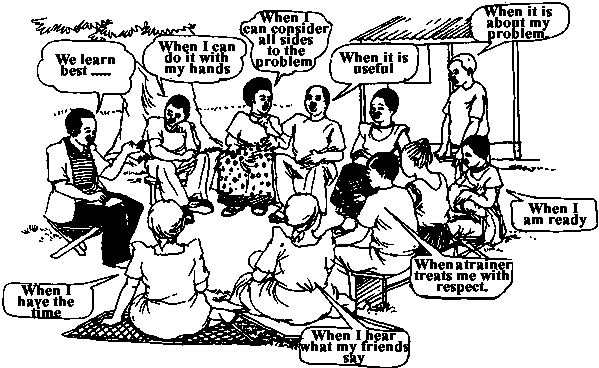
Andragogy: How adults learn best


Andragogy refers to learning strategies which help adults to learn more effectively. It is a term that was first used by Alexander Kapp in 1833 and later expanded by Malcolm Knowles to fit the needs of adult education. The concept is contrasted with pedagogy in which the child is lead through the learning process by the teacher. In andragogy most of the learning is self-directed and the teacher is a facilitator in the learning process. 


Pedagogy is more content-oriented. 
Andragogy is more process-oriented.

This is essential in medical education due to the fact that by the time we reach medical school we are less receptive to teacher-centered education and are already in a phase where learning is more independent. Although I had already come across this concept a while ago, this concept was covered in an educator's conference put together by Rob Rogers, MD (@EM_Educator). I followed this conference via twitter and Livestream in mid-November and it was great. (Link to blog and tweets from the conference.)


Knowles identified six characteristics that motivate adult learners (1)

Need to KnowAdults need to know the reason for learning something
FoundationExperience (including error) provides the basis for learning activities
Self-ConceptAdults need to be responsible for their decisions on education; involvement in the planning and evaluation of their instruction
ReadinessAdults are most interested in learning subjects having immediate relevance to their work and/or personal lives
OrientationAdult learning is problem-centered rather than content-oriented
MotivationAdults respond better to internal versus external motivators

I think this concept should help us to become more effective educators because it provides a better look into the mind of the adult learner. It really shows that we are not satisfied when we are given a simple answer such as “because I said so” - an answer that might work with children.


Here are a few examples where you can find andragogy in medical school and residency:

  • Problem Based Learning (PBL): A group of trainees gather together to solve clinical problems. 
  • Clinical Problem Solving: This makes learning more relevant to real life experiences.
  • Trainees have different backgrounds and they bring these experiences with them to a learning group and facilitate learning.
  • When the trainee looks up information without being prompted by the trainer it shows the learner is self-reliant. 


A comparison of the assumptions of pedagogy and andragogy following Knowles (Jarvis 1985: 51) (Adapted from table)


Pedagogy
Andragogy
LearnerDependent. Teacher directs what, when, how a subject is learned and tests that it has been learned.Moves towards independence.
Self-directing.Teacher encourages and nurtures this movement.
Learner’s experience Of little worth. Hence teaching methods are didactic.A rich resource for learning. Hence teaching methods include discussion, problem-solving etc.
Readiness to learnPeople learn what society expects them to. So that the curriculum is standardized.People learn what they need to know, so that learning programmes organised around life application.
Orientation to learningAcquisition of subject matter. Curriculum organized by subjects.Learning experiences should be based around experiences,since people are performance centred in their learning.

Of course this concept is not without its criticisms and even Knowles recognized that this concept can also apply to children. It is clear that when we reach adulthood we should move to a more learner-oriented system and move away from teacher-oriented system. In the end during our training the learning process is a team project where the exchange of information can be interchanged between the trainer and the trainee. After training it is still our responsibility to become independent effective learners and stay up to date with the medical literature. If these concepts are applied effectively during our training the process will help us to become more effective long life learners. 


I would love to read your comments on this topic. Are you a content-oriented, a process-oriented, or both type of learner? 

References 

  1. Wikipedia; Andragogy; Last update: Sept 17, 2012
  2. Smith, M. K. (1996; 1999) 'Andragogy', the encyclopaedia of informal education, Last update: May 29, 2012.
  3. Instructional design; Andragogy (Knowles)
  4. Dr. Shawn Bullock; Introduction to Andragogy, YouTube Video, Posted Sept 17, 2012

Image 1 source: http://collections.infocollections.org/ukedu/uk/d/Jh0414e/5.1.html
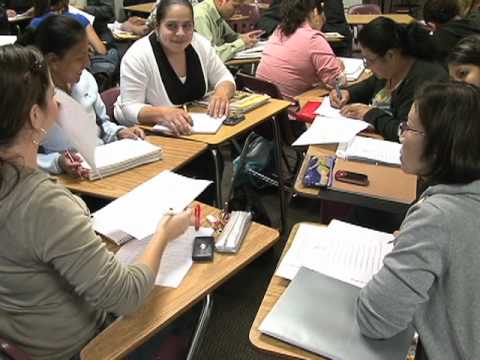
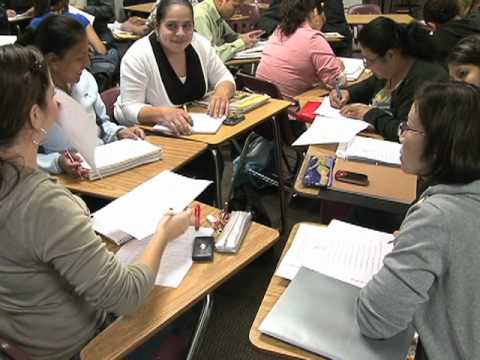
Image 2 source: http://i.ytimg.com/vi/6JbN16oL3Ho/0.jpg

Article review: Macrocognition in novices and experts in the ED

Expert physicians: These are the ones who effortlessly handle a busy Emergency Department while juggling patient load, learners and consultants.  

  • How do they make decisions?  
  • How do they get there?

This article studied macro-cognition differences between novices and experts in the Emergency Department.

What was the study method?
Qualitative study using semistructured interviews with novices (first year residents) and experts (more than 5 years in practice). Questions probe specifically for critical decision making cues.

What were the results?
Between the 5 novices and 6 experts, their differences are summarized:


How would I apply this in teaching? 
Specifically for junior trainees, I might: 
  • Set time frame for procedures
  • Explain hospital policies
  • Discuss potentially difficult interactions beforehand
  • Ensure learners feel safe to ask questions

Reference
Schubert CC, Denmark TK, Crandall B, Grome A, Pappas J. Characterizing Novice-Expert Differences in Macrocognition: An Exploratory Study of Cognitive Work in the Emergency Department. Ann Emerg Med. 2012 Oct 2. Pubmed .


What is debriefing in simulation education?

Debriefing at the Univ of New England


Medical education high-fidelity simulation allows for deliberate practice in a safe environment. We are able to miss the intubation repeatedly or botch up the management of aspirin overdose without the demise of the patient.  At the end of each session, we gather in a pow wow and debrief….

I have been involved with debriefings, and often wonder what residents are thinking:
  • Do they understand what debriefing means? 
  • Do they think this is the time where they are scolded for mistakes? 
  • Do they think it is a valuable part of the simulation?
What does debriefing even mean? 

Debriefing is a broad topic, and definitions vary depending on the field of reference such as medical education versus aviation.  My goal is to provide an overview and only discuss what is debriefing within the simulation medical education context. 

According to Fanning and Gaba [1], debriefing is “facilitated or guided reflection in the cycle of experiential learning.”  Harvard’s Center for Medical Simulation describes debriefing as a conversation among participants with the ultimate goal to improve performance in real situations. [2] It is a process by which to identify and address gaps in knowledge and skills. [3] 

Debriefing (post-experience analysis) is thought to be one of the most important features of simulation based medical education. Simulation can lead to an experience that is emotional and thought provoking - aka experiential learning. (Think of how you feel when you poorly execute the resuscitation of the manikin in a simulation session.)  Debriefing plays a role in the reflection and analysis of that experiential learning.
The following elements are usually involved in debriefing: 
  • Facilitator
  • Participants to debrief
  • Experience
  • Impact of the experience
  • Recollection
  • Report
  • Application
The Participants go through the simulation case (Experience) and develop an Impact from the experience.  During the debriefing they Recollect the impact, and Report upon it.  Although reflection often happens regardless, debriefing allows the Facilitator to organize the reflection in a productive manner. 

Think of the last resuscitation that you felt was botched up.  You probably reflected on it alone, hopefully not in the local bar.  Your reflections may have been scattered and perhaps included unproductive self-criticisms that didn’t aid learning.  Compare that to your last simulation session where there was a useful structured reflection with a facilitator, learning points were discussed, and hopefully lessons were retained for a longer period.

Ultimately the goal of debriefing is to engage in a conversation where learning happens. It is an open format for discussion of the events that occurred, how we felt about it, and understanding the thought processes.  It allows for identifying areas where perhaps knowledge or skill was missing so that it can be corrected in the future.  So maybe debriefing is a little touchy-feely, but what’s wrong with a little human contact?!

The purpose of this post was to discuss what is debriefing; future posts will discuss why we debrief.  I would love your thoughts on this subject.  Please feel free to discuss!

References
  1. Fanning RM, Gaba DM. The role of debriefing in simulation-based learning. Simul Healthc. 2007. Summer;2(2):115-25. PMID 19088616.
  2. "DebriefingAssessment for Simulation in Healthcare (DASH)." DASH. Center for Medical Simulation, 2009. Web. 03 Nov. 2012.
  3. Raemer D, Anderson M, Cheng A, Fanning R, Nadkarni V, Savoldelli G. Research regarding debriefing as part of the learning process. Simul Healthc. 2011 Aug 6; Supple:S52-7. PMID 21817862.
Thanks to Dr. Stella Yiu and Dr. Javier Benitez for letting us know about Dr. Hart's and Dr. Ernest Wang's videos on Debriefing, respectively:


Seth Godin's TED talk on "Stop Stealing Dreams"


Seth Godin, a marketing guru, discusses his opinion about “what school is for” in this above video. Although this talk or Seth Godin are not directly related to medical education, this is still related to education and can still be applied to today’s medical education curriculum in many aspects.
Mr. Godin goes on to explain that school was modeled in the industrial age and has changed little ever since. The video covers such concepts as:
  • Standardized exams in the industrial age were used as a tool to sort students. The person who created the standardized exams later on came to believe that the standardized exams were too crude, but due to his new conclusions he was excluded from his field. 
  • Teachers in the industrial age believed that school was about teaching obedience and respect. 
  • The industrial revolution created products en mass, but also needed people who were educated on consuming these products in order to survive. Therefore, schools were also created to educate people (or make replicas of people) about these products.

Mr. Godin states that people are more inclined to do more if it’s art, but do less if it’s work. He also says that now we are more intrigued in interesting stuff, but schools are dissuading us from being creative. With the help of technology: 
  • We are finding out new ways of learning so that we don't depend so much on the person standing in front of a classroom giving a lecture. 
  • We can read about what interests us
  • We can view lectures from experts
  • We can learn anything with the help of the internet. 

He then goes on to enumerate 8 things to answer what school is for, or better yet, how he thinks school SHOULD function:

1. Homework during the day, lectures at night.

This sounds like the concept of “flipping the classroom” (similar to Khan's Academy) where students watch lectures at night and come to school to work out problems during the day with their teachers.  

2. Open book, open note all the time.
“There is zero value memorizing anything ever again. Anything that is worth memorizing is worth looking up.” I’m not sure if I agree with this 100%, but it sounds similar to another quote by Albert Einstein about memorizing “Never memorize something you can look up.”
3. Access any course, anywhere, anytime in the world when you want to take it.
This is an example of asynchronous learning such as Coursera.
4. Precise focused education instead of mass batched stuff.
I think this is one of the most important goals in medical education. Our education needs to be specific as to what is relevant when it comes to patient care. Information has exploded in the past few decades, but medical school still modeled as it was created 100 years ago when there was not as much information around.
  • No more multiple choice exams: According to Seth Godin these were made because they are easier to score, but now computers are smarter.
  • Measure experience, instead of test scores: “Experience is what we really care about”
  • Cooperation instead of isolation: Seth Godin states when we finish school we go out in the world to collaborate with others so we should value collaboration and not so much isolation.
5. Teachers will transform into coach(es).

6. Lifelong learning with work happening earlier in life.

7. Death of the "famous college". 

Seth Godin puts emphasis on defining the "good colleges", but he also states we don't know what a good college is.
     
8. Teach students to create something interesting and ask if you need help.

Things we should not be telling students according to Mr. Godin:
  • Do not to deviate from the curriculum
  • Better, better, better, better comply
  • Do not ask questions I do not know the answers to
  • Do not figure it out
  • Do not look it up
  • Be like your peers
The concept is that the more the student deviates from the "standard" the more difficult it is for the teacher to process the student.

Seth Godin ends the video by busting two myths:
  1. Great performance in school lead to happiness and success. If that’s not true, we should stop telling ourselves it is.
  2. Great parents have kids who produce great performance in school. If that’s not true we should stop telling ourselves it is.
Mr. Godin states we don't teach students to connect the dots, but rather to collect dots and memorize facts. He also declares that passion and insight are reality, while grades are an illusion. He returns to the question "what is school for?" and if we don't know, then we should have a conversation about it.

I think this is an important talk by Seth Godin and we must find which points we can apply to improve our medical education. Which points from Mr. Godin's talk do you think can be applied to improve medical education? Do you already know examples in medical education in which his points are already implemented? What is school for?
online dating chat rooms,free online dating chat,online dating chat tips,dating sites chat,chat avenue dating,online games dating,online chat singles,love dating online dating chat rooms,free online dating chat,online dating chat tips,dating sites chat,chat avenue dating,online games dating,online chat singles,love dating