Showing posts with label toxicology. Show all posts

Tricks of the Trade: Calcium gel for hydrofluoric acid burns

From AccessMedicine.com

A 41 y/o m presents to your ED after an occupational exposure to 30% hydrofluoric acid (HF). The thumb and index finger of his right hand were affected. Upon visual examination, the site of exposure looks relatively benign but the patient is complaining of extreme pain. Beyond giving opioids, what can you do?


Topical calcium gluconate is the treatment for minor to moderate cutaneous burns from HF.

It would be really nice if there were a commercially available calcium gluconate gel available. Wait, there is! But it's pretty expensive and most hospitals won't stock it. G
eneric versions of 2.5% calcium gluconate gel are also hard to come by.

Trick of the Trade:
Make your own calcium gluconate gel.

What you'll need:
  1. Calcium carbonate tablets (Tums®), calcium gluconate powder, or solution
  2. A water-soluble jelly (K-Y Jelly® works great)
How to prepare: Mix any of the following with 5 ounces of K-Y Jelly®:
  • 10 g of calcium carbonate tablets, or
  • 3.5 g calcium gluconate powder, or 
  • 25 mL of calcium gluconate 10% solution
How to administer:
  1. Thoroughly irrigate the area with water. 
  2. Apply your concoction directly to the affected area. 
  3. The best trick is to add the gel into a surgical glove and have the patient wear it for at least 30 minutes.
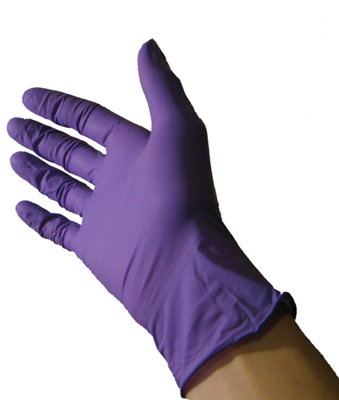

Don't expect your gel to look like one you could sell for profit. I'm a pharmacist with training in compounding and it still comes out pretty ugly (especially with Tums®).

Other routes of calcium administration for topical burns include intradermal, intravenous, and intraarterial. An IV Bier block technique using 25 mL of 2.5% calcium gluconate has also showed 
some success.

Disposition

All patients with digital exposures should be observed over 4-6 hours. The pain usually recurs and you may need to reapply the gel (or maybe even try an alternative therapy). Make sure your patient has good discharge instructions and has access to specialized followup and wound care.


References

Anderson WJ, Anderson JR. Hydrofluoric acid burns of the hand: mechanism of injury and treatment. J Hand Surg. 1988;13:52-7. [PMID: 3351229]


Chick LR, Borah G. Calcium carbonate gel therapy for hydrofluoric acid burns of the hand. Plastic Reconstr Surg. 1990;86:935-9. [PMID: 2236319]


Bracken WM, Cuppage F, McLaury RL, et al. Comparative effectiveness of topical treatments for hydrofluoric acid burns. J Occup Med. 1985;27:733-9. [PMID: 4067676]

Upfal M, Doyle C. Medical management of hydrofluoric acid exposure. J Occup Med. 1990;32:726-31. [PMID: 2401930]


Burkhart KK, Brent J, Kirk MA, et al. Comparison of topical magnesium and calcium treatment for dermal hydrofluoric acid burns. Ann Emerg Med. 1994;24:9-13. [PMID: 8010555]

Kirkpatrick JJ, Burd DAR. An algorithmic approach to the treatment of hydrofluoric acid burns. Burns. 1995;21:495-9. [PMID: 8540974]


Su M. Chapter 105. Hydrofluoric Acid and Fluorides. In: Su M, ed. Goldfrank's Toxicologic Emergencies. 9th ed. New York: McGraw-Hill; 2011.

Peeing into the wind? Urine drug screens, part 2 (opiates)


Apart from benzodiazepines, the opiate urine drug screen (UDS) is probably the most frequently utilized and misunderstood.

BACKGROUND
For a brief history of the UDS and a review of the test for benzodiazepines, check out part 1 of our two-part series.

OBJECTIVE
To properly interpret the UDS for opiates.

First, a couple of prerequisites... 

1) Opiate vs. Opioid


  • These two terms are often used interchangeably and really shouldn't be.
  • Think of it like this: 'Opioid' is the broad category name while 'opiate' simply refers to the naturally occurring opioids. The term 'opioid' encompasses opiates, semi-synthetic, and synthetic agents. The chart below gives a few examples of each.


2) Forgive me in advance for the structures, but I think it's important to understand why a drug may or may not show up on the UDS. I can't get rid of the chemist in me... 


  • The point here isn't to analyze structures, but simply to see the similarities between morphine, heroin, and oxycodone. 
  • Oxycodone, a semi-synthetic, is similar to morphine.
  • Methadone, a synthetic, has a completely unrelated structure.

LEARNING POINTS

  1. Notice the name of the UDS next time you order one. It is opiates (not opioids).
  2. The test was designed to look for heroin (technically a semi-synthetic) via its metabolite, 6-monacetyl morphine. It also picks up morphine and codeine.
  3. The test does not specifically look for oxycodone, hydromorphone, hydrocodone, etc. They can trigger a positive result due to their structural similarities, but not in every case. Therefore, a negative result doesn't rule out use of these common drugs of abuse.
  4. Synthetics will never cross-react with the opiate UDS. They are too structurally dissimilar. That's why we have a separate test for methadone.

BOTTOM LINE
A negative result doesn't rule out opioid ingestion and a positive result only guarantees that heroin, morphine, or codeine is present. Like the benzo screen... not very helpful, in my humble opinion.

Peeing into the wind? Urine drug screens, part 1 (benzodiazepines)


Let’s be honest.

When was the last time results from the urine drug screen (UDS) changed your management plan?

Many times it takes hours for the patient to give the urine sample anyway. And, with all of the false positives out there, how do we know what the heck the result is actually telling us?

OBJECTIVE 
Today’s post will help you properly interpret the UDS, particularly focusing benzodiazepines.

Introduction:
The original UDS was termed the NIDA-5 (amphetamines, cannabinoids, cocaine, opiates, and phencyclidine) because they are the five drugs that were recommended by the National Institute on Drug Abuse (NIDA) for drug screening of federal employees back in the late 1980s. Drug-screening immunoassays are also frequently done for barbiturates and benzodiazepines and less frequently for methadone.

That has to raise some caution flags right off the bat! This test was not designed for Emergency Departments or hospitals for that matter. It was developed to screen federal employees. The fact that we have made it part of our standard practice affords various limitations.

In general, the qualitative UDS for each drug is looking for a particular structure. If the immunoassay identifies that structure (or one similar), it will trigger the test positive. Let's take a closer look at the test for benzos.


Benzodiazepines:

Benzodiazepines are pretty popular. In the U.S., alprazolam, clonazepam, lorazepam, and diazepam are among the most commonly prescribed medications in the outpatient setting. Here are the important points regarding this test:
  1. Most benzo screens look for oxazepam. If you're wondering how this could possibly be helpful since few patients are on oxazepam, you're not alone. However, diazepam and chlordiazepoxide both are metabolized to oxazepam. So, by looking for oxazepam, you actually pick up three benzos in one.
  2. The test does not specifically look for alprazolam, clonazepam, lorazepam (or many others). Therefore, a negative result does not necessarily rule out use of these agents.
  3. The tricky part is that benzos vary in reactivity and potency and can trigger a positive result due to cross-reactivity.
BOTTOM LINE
A negative result doesn't rule out benzodiazepine ingestion and a positive result only guarantees that oxazepam, diazepam, or chlordiazepoxide is present. Not very helpful, in my humble opinion.

Next time we'll fully explore the opiate screen. Stay tuned...

Busting the myth: The 10% cephalosporin-penicillin cross-reactivity risk


To give or not to give a cephalosporin in penicillin-allergic patients?

I remember back to my days in pharmacy school when I learned that there was approximately a 10% risk of cross-reactivity, if a cephalosporin was given to a penicillin-allergic patient. They probably said something about the risk being less with 3rd and 4th generations cephalosporins, but lets be honest... who remembers anything but that magic 10%? When I started working more with physicians, I found that they also learned the same 10% rule in medical school. Well, I guess that means it’s fact, right? Not so fast!

It turns out that prior to 1980, penicillins and cephaloporins were often produced using the same fungus and the chance for contamination during the manufacturing process was high. The belief was that the beta-lactam ring similarities must be the cause. How wrong we were.

More recent studies have determined that the actual risk of cross-reactivity relates more to a side chain similarity and probably not the beta-lactam ring at all. Therefore it makes sense that if a penicillin and a cephalosporin share that particular (R-1) side-chain similarity, the risk of cross-reactivity is increased. Such is the case with amoxicillin or ampicillin with:
  • 1st generation cephalosporins: cefadroxil, cefatrizine, cephalexin, cephradine
  • 2nd generation cephalosporins: cefaclor, cefprozil
A new review article of 27 articles on this very topic just came out reporting:
  • Overall cross-reactivity rate between cephalosporins and penicillins in patients reporting a penicillin allergy = 1%
  • Overall cross-reactivity rate in patients with a confirmed penicillin allergy = 2.5%

Other key findings to note:
  1. The true incidence of an allergy to penicillin in patients believed to have such allergy is <10% (it’s like we have a built in 10-fold safety factor).
  2. Cross-reactivity between penicillins and MOST 1st and 2nd generation cephalosporins is negligible.
  3. Cross-reactivity between penicillins and ALL 3rd and 4th generation cephalosporins is negligible.
  4. If a patient has an allergy to amoxicillin or ampicillin, avoid cefadroxil, cefaclor, cefatrizine, cefprozil, cephalexin, and cephradine.
Bottom Line:
You can feel comfortable clicking past the flashing allergy alert as you enter that ceftriaxone order in your patient with a documented penicillin allergy. If the patient has an allergic reaction, it's more likely a unique allergy to that cephalosporin than any cross-reactivity with a penicillin.

References:
Campagna JD, Bond MC, Schabelman E, Hayes BD. The use of cephalosporins in penicillin-allergic patients: A literature review. J Emerg Med. 2012;42(5):612-20. Pubmed . 

Some Lessons Learned From ACEM 2011 Bangkok - Emerging Drugs of Abuse in Asia and Riot Control Agents

In every conference that I attended, I tried to learn at least one or two things, if not, more. In ACEM 2011, I find that the toxicology track was particularly interesting. Two specific topics are of particular interest to me (since they are relatively new stuffs to me):Emerging Drugs of Abuse in AsiaRiot Control Agents In this blog post, I will share some of the things I learned from
online dating chat rooms,free online dating chat,online dating chat tips,dating sites chat,chat avenue dating,online games dating,online chat singles,love dating online dating chat rooms,free online dating chat,online dating chat tips,dating sites chat,chat avenue dating,online games dating,online chat singles,love dating